


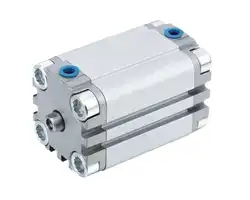


The pneumatic cylinder has many positive advantages:
- smooth power and speed control;
- high strength despite small size;
- the leakage does not cause any harm to the environment;
- simple design ensures low purchase costs;
- do not require lubrication (polyurethane seals);
- high working speed;
Pneumatic actuators - producer
The production profile of pneumatic cylinders currently includes 14 cylinder models and is still being expanded. The remaining offer is completed by pneumatic actuators from the Italian manufacturer Airwork.
ISO64312 round pneumatic cylinders
The round crimp pneumatic cylinder is available in diameters from 10mm to 25mm. The round pneumatic cylinder is manufactured according to the ISO6432 standard, which guarantees interchangeability with a third-party cylinder. Standard equipped with a magnetic insert that allows the assembly of piston position sensors with the use of handles. The ISO6432 pneumatic actuator works in the pressure range from 1 to 10 bar and at a temperature of -20°C up to +90°C. Polyurethane seals allow it to work in lubrication-free conditions.
We produce a round pneumatic cylinder in several variants:
-
single-acting pneumatic cylinder
-
double-acting pneumatic cylinder
ISO15552 standardized pneumatic cylinder
We manufacture the ISO15552 pneumatic cylinder in accordance with the ISO15552 standard. This ensures that the actuator from other manufacturers is interchangeable. This standard guarantees the same dimensions and spacing of the mounting bolts as in the previous, worn-out actuator. The advantage of this air cylinder is its polyurethane seals. They guarantee long and failure-free operation of the actuator in lubrication-free conditions. In the case of difficult working conditions, we can use other seals, e.g. resistant to high or low temperature. The double-acting pneumatic cylinder is produced in the diameter range from 32mm to 125mm, and its maximum stroke is 2800mm. It is characterized by a working pressure in the range from 1 to 10 bar. The piston cylinder has a complete set pneumatic accessories for its assembly: feet, collars, tips with ball joints, lugs, forks or yokes. In the standard solution, the actuator already has a magnetic insert that allows the installation of piston position sensors.
Pneumatic cylinders with a guide
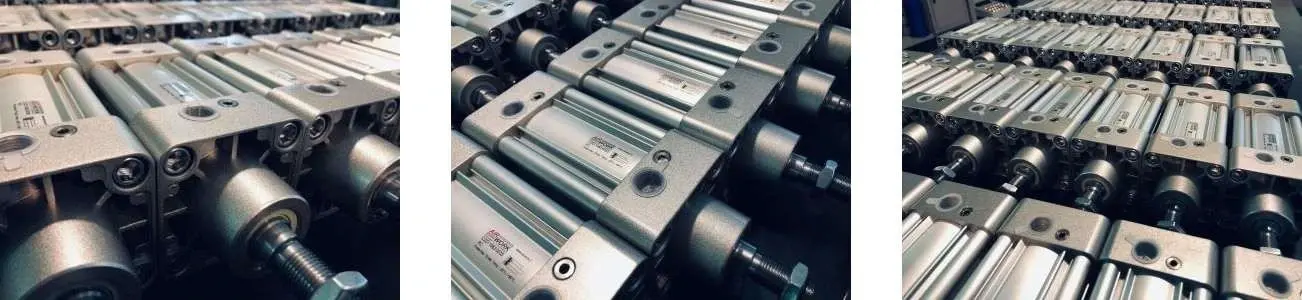
A pneumatic cylinder with a guide is designed to reduce the load and anti-torsion forces. The use of a chain in a pneumatic cylinder allows increasing the permissible radial load on the piston rod. Thanks to two steel rods, the guide with the actuator improves its guidance, which takes place thanks to bronze bushings or bearings. The pneumatic cylinder with a guide is produced in the diameter range from 32mm to 100mm, and their maximum working stroke is 2800mm.
Pneumatic cylinders with piston rod brake
Pneumatic cylinder with brake I cause mechanical blockage of the piston rod in extreme positions. The brake shoes, on which the spring forces are applied, block the movement of the piston rod without damaging its surface. The pressure of the lock on the piston rod is always greater than the force of the extension of the piston rod. The piston rod lock, available in diameters from 16mm to 125mm, can be supplied with or without the actuator. The brake of the pneumatic cylinder must have a separate power supply from the pneumatic cylinder, so that in the event of pressure loss in the system, the jaws can close.
An additional advantage of the brake cylinder mounted on the cylinder is the lock of the piston rod dropping in the event of cutting off the supply of compressed air or in the event of an emergency stop. The pneumatic lock is normally closed, which means that in the absence of compressed air supply, the jaws are locked on the piston rod. As soon as power is applied to the blockage, the jaws are opened.
Pneumatic cylinders CQ 160-200mm
A group of pneumatic actuators manufactured in the diameter range from D160 to D200mm. CQ pneumatic cylinders are characterized by high strength. Manufacturing with a magnetic piston that enables the operation of piston position sensors. Due to polyurethane seals, the piston cylinder does not require lubrication. Despite its large dimensions, the production of this model of the pneumatic actuator does not take long. Standard production time is approximately 2 days.
Compact pneumatic cylinders
Compact cylinder in the ISO21287 version and the UNITOP version. The production of this model of the compact actuator is available in diameters from 16 mm to 100 mm in the following versions:
-
Single-acting pneumatic cylinder pushing
-
single-acting, pulling pneumatic cylinder
-
double-acting pneumatic cylinder
-
pneumatic cylinder with one-sided and double-sided piston rod
-
actuator with internal or external thread
- actuator with a chromed piston rod or with a stainless piston rod.
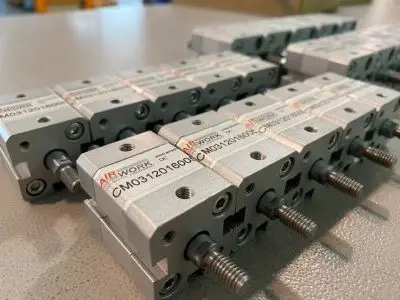
The compact pneumatic cylinder as standard contains magnesium built into the cylinder piston, thanks to which it is possible to use piston position sensors. Compact pressure cylinders are characterized by low weight and short design, which allows them to be installed in hard-to-reach places. An additional advantage is that they obtain the same working stroke length as in standard standard cylinders, but with smaller, compact dimensions.
Pneumatic anti-rotation actuators
Like its standard counterpart, the anti-rotation pneumatic actuator is manufactured in accordance with the ISO21287 standard. It allows you to easily replace the actuator with a third-party actuator.
Guided pneumatic cylinders
The guided pneumatic cylinder is a new generation of pneumatic cylinders presenting high quality of work. The pneumatic cylinder with the guide is mounted in various positions, depending on the desired direction of extension. The pneumatic cylinder has a guide that takes place on both slide and ball bearings.
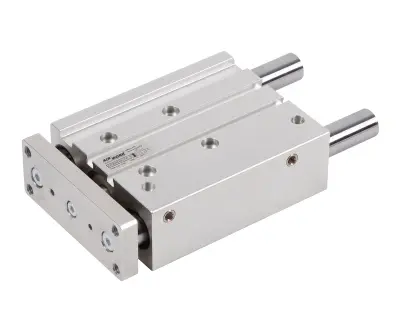
Slide actuators are often used as a pressure element or to avoid mounting a pneumatic actuator with a slide rail, which increases costs significantly. Since 2017, the actuator with a guide is also produced with a shock-absorbing version.
Rotary pneumatic actuator
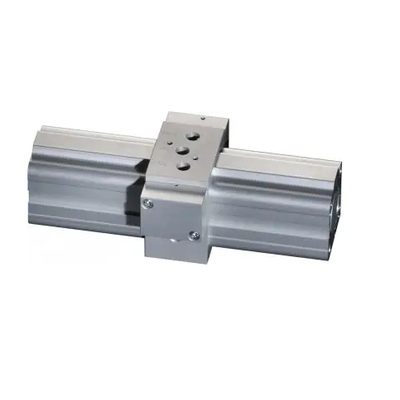
Rotary pneumatic actuator enables to obtain a rotational movement with a constant angle of rotation. The pendulum pneumatic actuator is characterized by the fact that the linear motion is converted into the rotary motion of the shaft at a certain angle of rotation.
RY rotary and swing pneumatic actuators are designed with diameters from 32 - 125 mm. The magnetic piston of this model of the pneumatic actuator is equipped with a magnetic insert that enables cooperation with magnetic field sensors. Rotary pneumatic actuators allow to obtain a rotary motion with a constant angle in the range of 90, 180, 270, 360 degrees. They work in temperatures from -20C to + 80C and, thanks to polyurethane seals, do not require lubrication. The body of the swing cylinder is made of anodized aluminum.
Rotary pneumatic actuator It is available with a rotation angle of 90 °, 180 °, 270 °, 360 ° and either with a shaft or a hole
Pneumatic cylinder - popularity
Pneumatic cylinder price
The price of the pneumatic cylinder is definitely worth mentioning. There is a wide range of prices for pneumatic actuators available on the market. Example pneumatic actuator price 32 mm diameter and 100 mm stroke on the popular auction site starts from 70 PLN gross. On the other hand, an identical actuator manufactured by Polish, German or American pneumatics manufacturers can cost up to PLN 400 gross. Is it worth buying a cheap pneumatic cylinder? In our opinion, no. Cheap actuators are most often made of materials of dubious quality. The basis for the low price are poor-quality seals made of NBR. Sellers of this type of actuator do not mention that the pneumatic actuator with NBR seals requires lubrication by means of a pneumatic line mounted compressed air lubricator. The seals of our cylinders are made of polyurethane, which do not require lubrication for operation. It is also worth paying attention to what material the covers and the piston rod of cheap cylinders are made of. A good quality pneumatic cylinder should last for many years, even in a difficult working environment. Are actuators with a value several times lower than the average price on the market able to meet these requirements? It seems not.
Pneumatic cylinder advantages
Pneumatic actuators used in industry enjoy great interest. They have the advantage that you can choose from a large number of models and sizes of standard cylinders, Cnomo cylinders, compact cylinders and small cylinders, and find the right pneumatic actuators for your various applications. The pneumatic cylinder is characterized by excellent temperature resistance, which allows them to work at very low or high temperatures. Unlike hydraulic cylinders, pneumatic cylinders are lightweight. They also do not cause magnetic interference. The pneumatic actuator is a simple structure and uncomplicated service, which allows you to replace the seals on your own. Medium - compressed air - is a cheap, easily accessible working medium. We invite you to read our article - construction of a pneumatic actuator.
